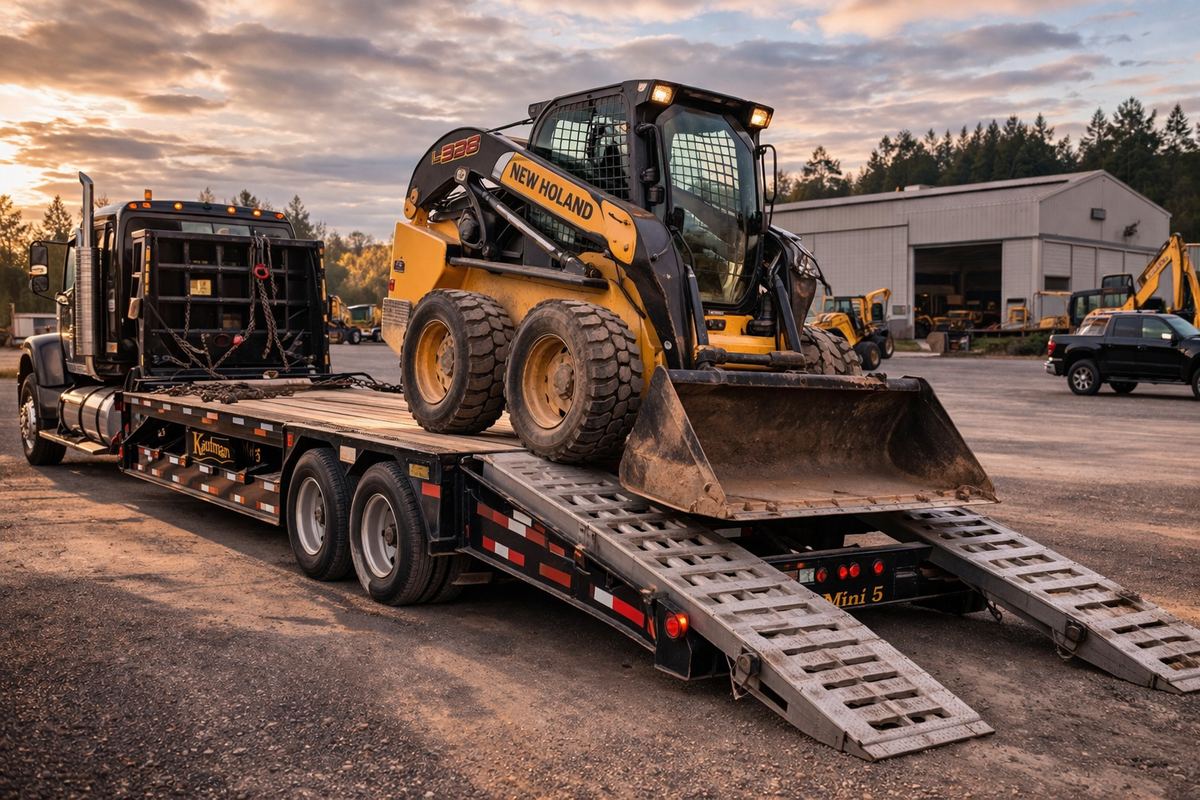
Describe the tractor as it will travel
A tractor with no implement is different from a tractor with loader, forks, blade, mower, or rear attachment. Describe the current setup instead of only naming the tractor.
If pieces can be removed or folded, say whether they will be.
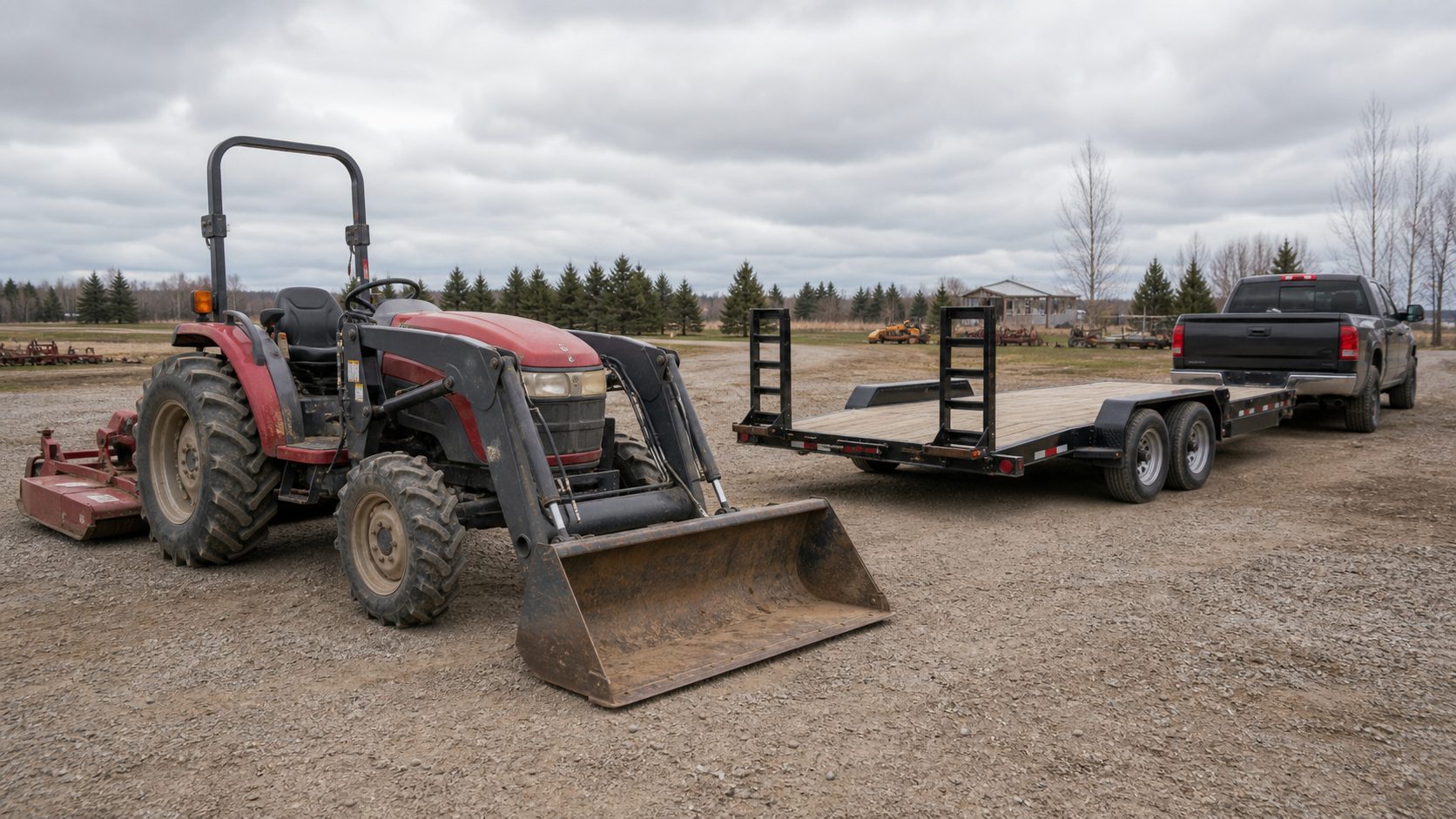
Tires, width, and implements matter
Tire size, duals, loader width, mower decks, blades, and rear implements can affect transport dimensions. These details are especially important when the tractor is older or modified.
Photos from the front, side, rear, and attachment area can answer the main questions.
Compact tractor, loader attached, rear blade loose, turf tires, runs and drives.
Tractor at farm, implement unknown, width not confirmed.
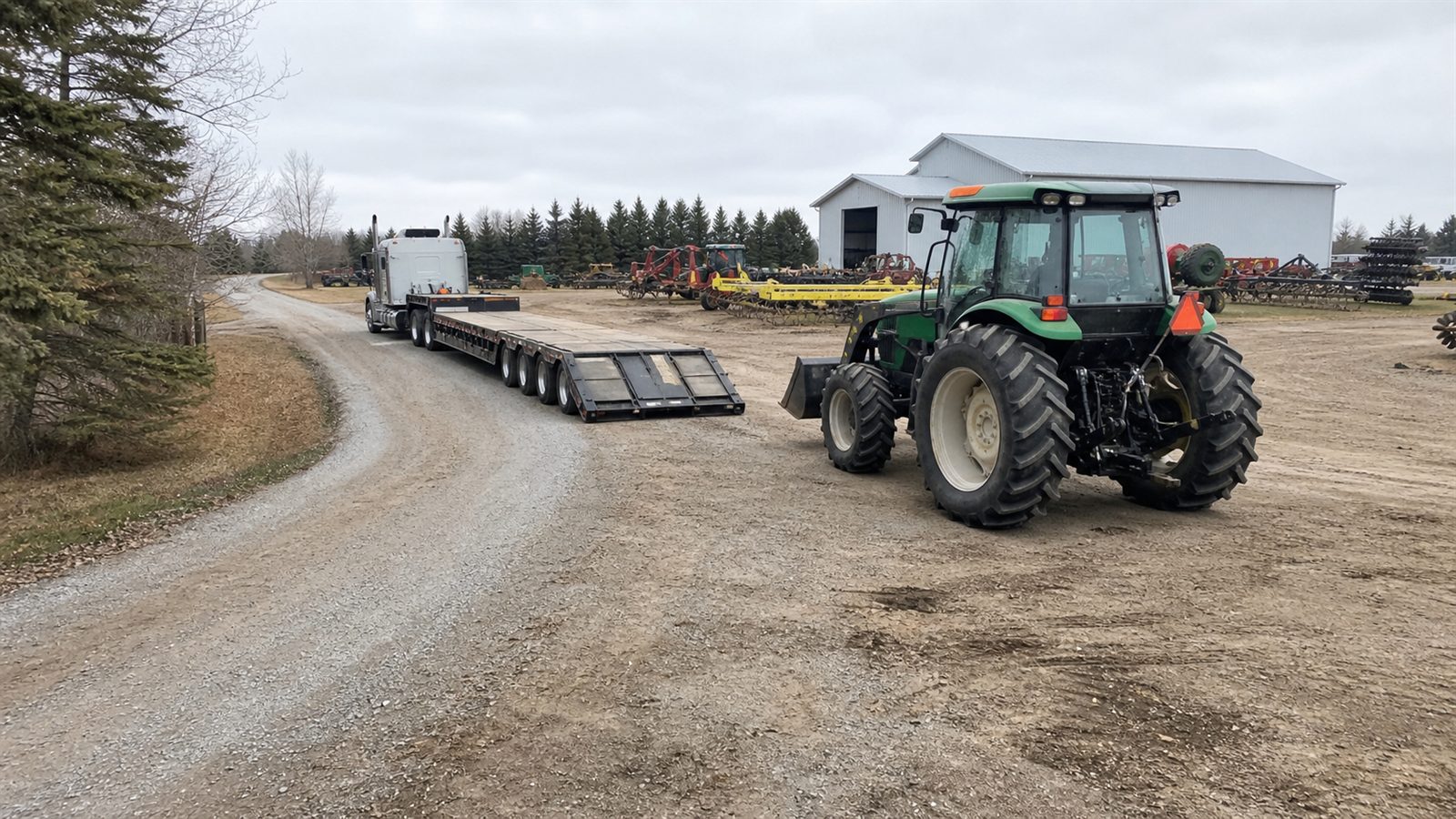
Rural access should be reviewed
Tractors often leave farms, acreages, fields, and private sellers. The loading area may depend on weather, ground, lane width, and seller availability.
A wide access photo is useful even when the machine itself is simple.
What to send for tractor transport
The quote review should see the tractor, attachments, condition, and rural setting together.
- Tractor model and size
- Loader or implements
- Tire and width notes
- Running condition
- Rural access photos
- Pickup and delivery contacts