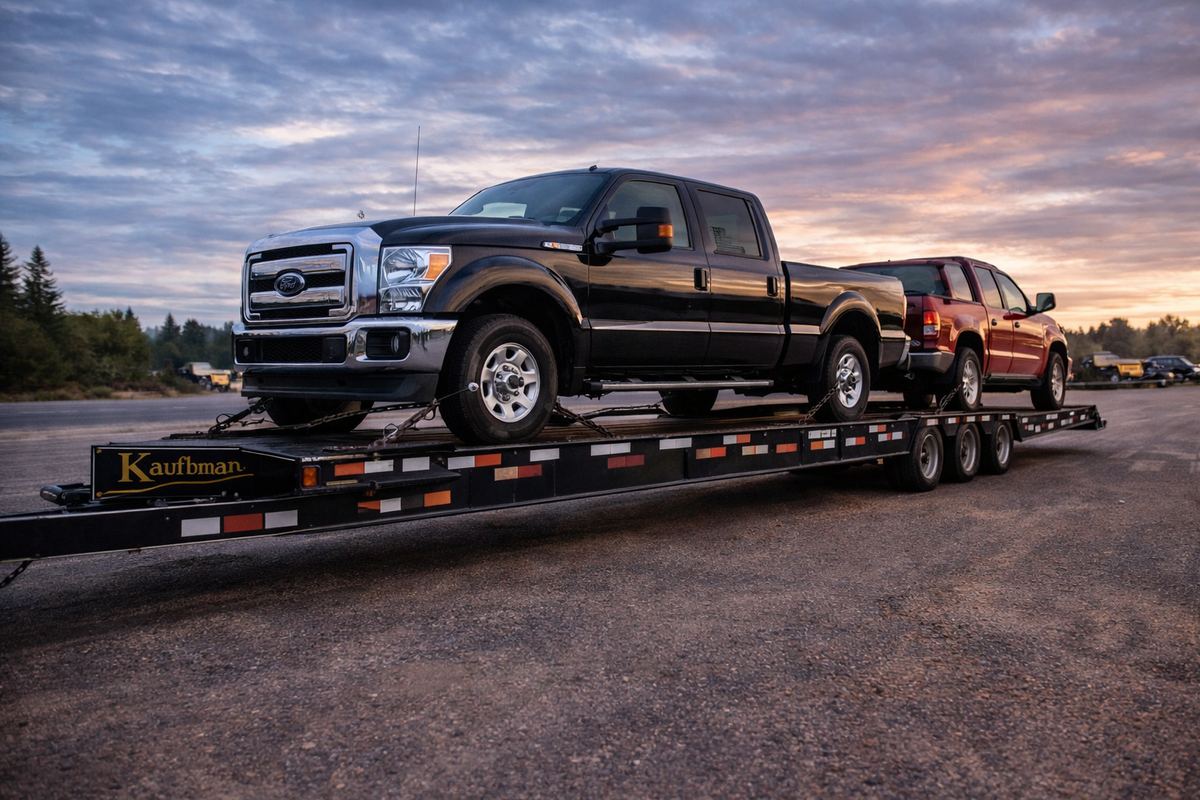
The address is not the whole access story
A civic address may get a driver close, but it may not explain the lane, gate, yard, barn, field edge, or turnaround. Rural pickups often need a little more local knowledge than a map can provide.
Plain directions are useful when the driveway is easy to miss, the GPS point is wrong, the road name changes, or the equipment is not visible from the road.
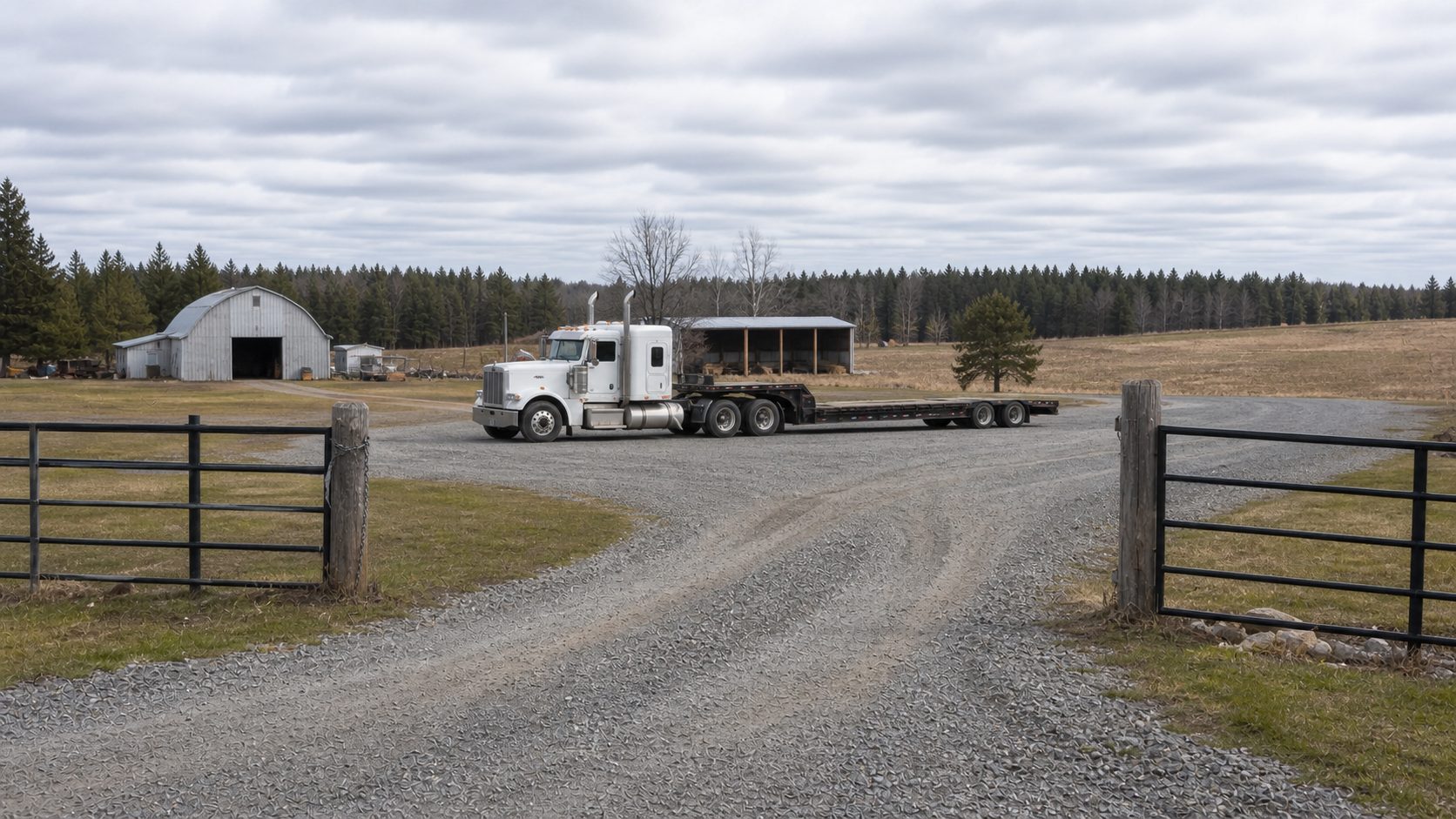
Ground and weather can change the plan
A yard that works in summer may be soft in spring, icy in winter, or muddy after rain. That matters for vehicles, equipment, and transport trucks.
If the pickup depends on firm ground, a plowed lane, daylight, or a dry weather window, say so early. Seasonal notes prevent a quote from assuming conditions that will not exist on pickup day.
Soft ground, snow, mud, slope, or narrow shoulders are not small details when a loaded trailer needs to enter and leave the property.
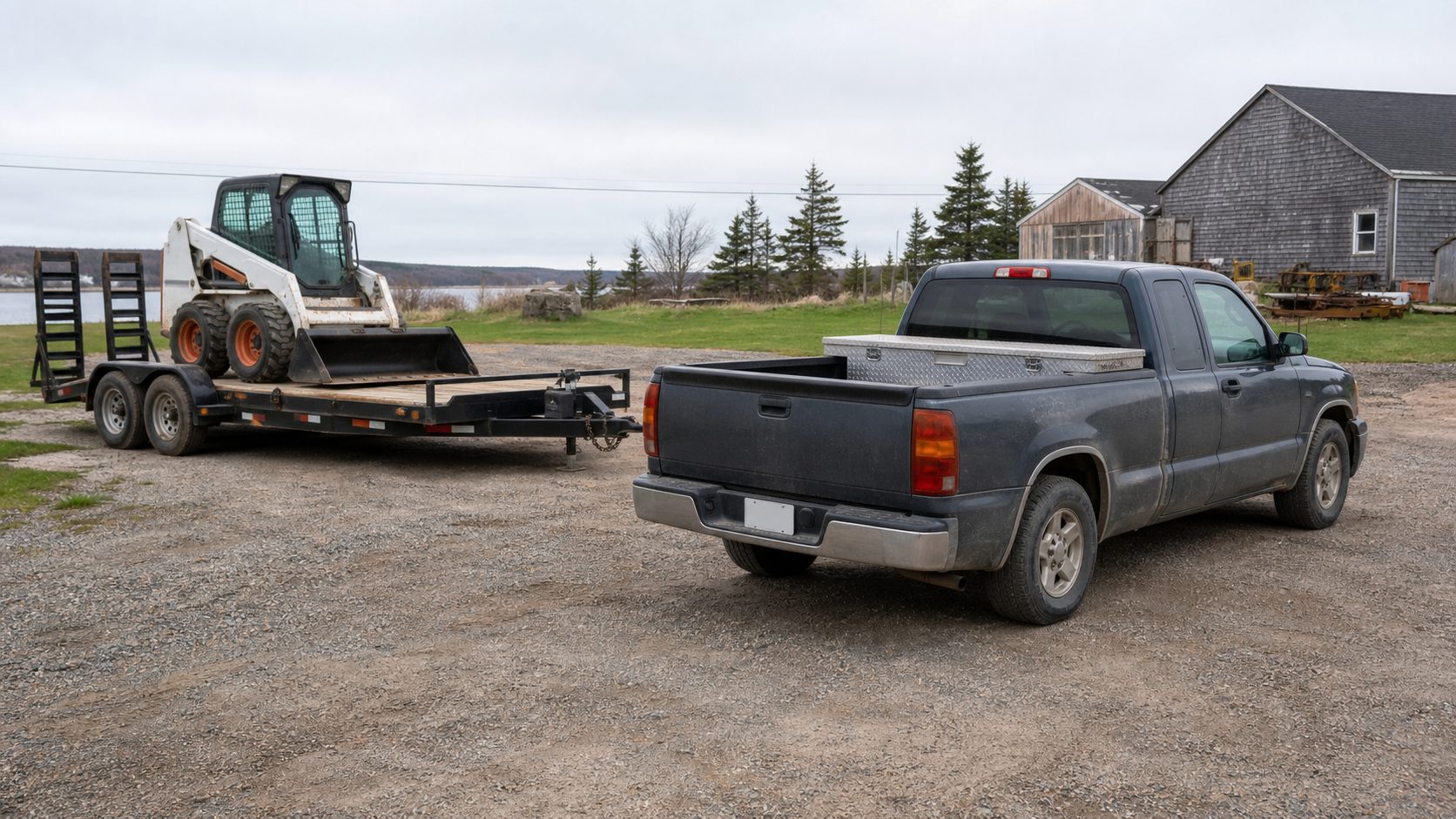
Someone local should be reachable
A local contact can confirm where the unit is, unlock a gate, move another vehicle, point out the best entrance, or explain where the driver can turn around.
For private sellers, farms, and rural businesses, that contact is often more important than the formal address. The person on site knows what has changed since the photos were taken.
Good rural pickup details reduce guesswork
The goal is not to overcomplicate a rural move. The goal is to remove guesswork around access, timing, and loading.
A few photos and plain notes can turn a vague rural pickup into a practical transport request.
- Directions if GPS is unreliable
- Lane, gate, and turnaround notes
- Ground and weather conditions
- Photos of access and loading area
- On-site contact and availability