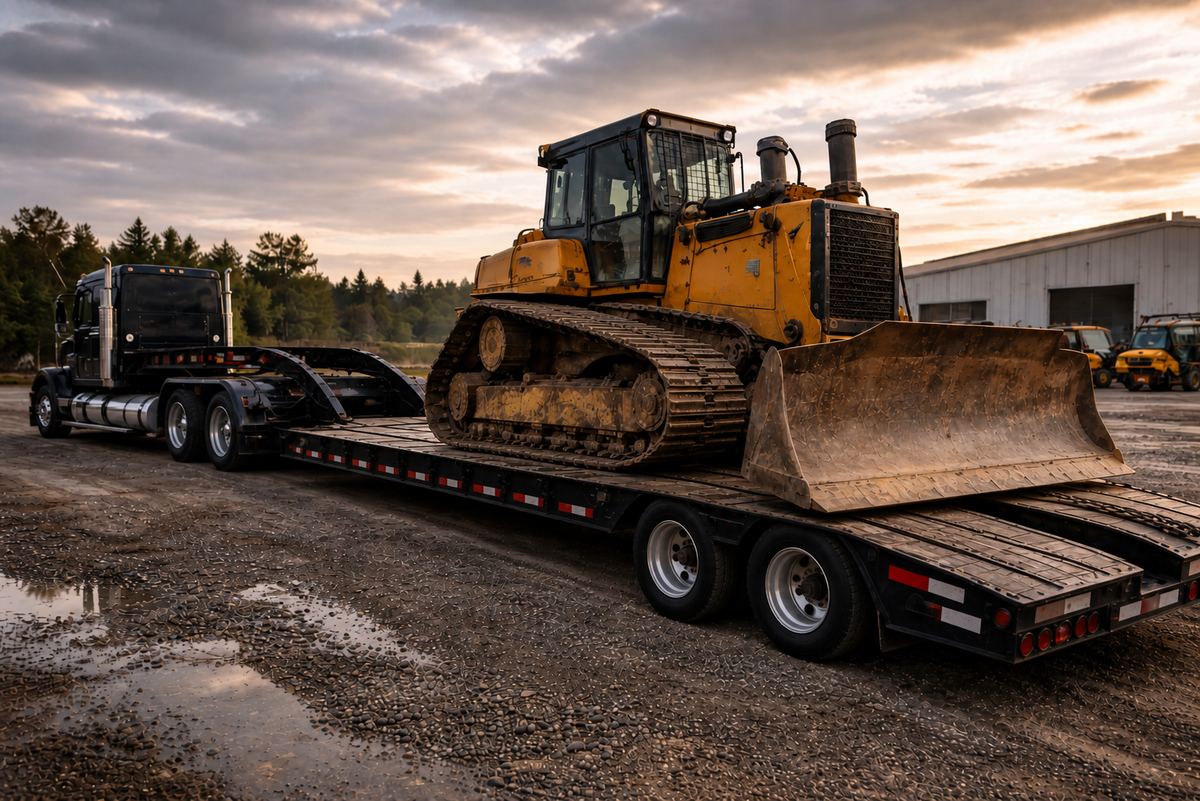
A useful quote starts with the actual load
A heavy equipment quote starts with the route, but it is built around the load. Pickup and delivery cities tell BEMAC where the move begins and ends; they do not explain what trailer will fit, whether the machine can be loaded, or whether the route has access concerns.
That is why the first useful details are usually the machine type, the model if known, the current setup, and clear photos. A dozer with a blade attached, an excavator with a bucket, a loader with wide tires, and a compact machine with forks are not interchangeable transport requests. They may all be "equipment," but each one can change deck space, height, securement, and route review.
The quote becomes more accurate when the details describe the machine as it sits today. If an auction listing shows one attachment but the yard says another attachment is included, that matters. If a machine has been modified, has extra implements, or is parked somewhere difficult to access, that matters too.
This is also why BEMAC may ask follow-up questions that seem small at first. A missing bucket, a wider blade, or a machine that cannot be driven onto a trailer can change the practical plan. The point of those questions is not to slow down the quote; it is to avoid quoting the wrong version of the move.
The quote can be reviewed around the actual equipment instead of a generic category. That reduces back-and-forth and helps identify trailer fit or route concerns earlier.
Dimensions and weight shape the whole review
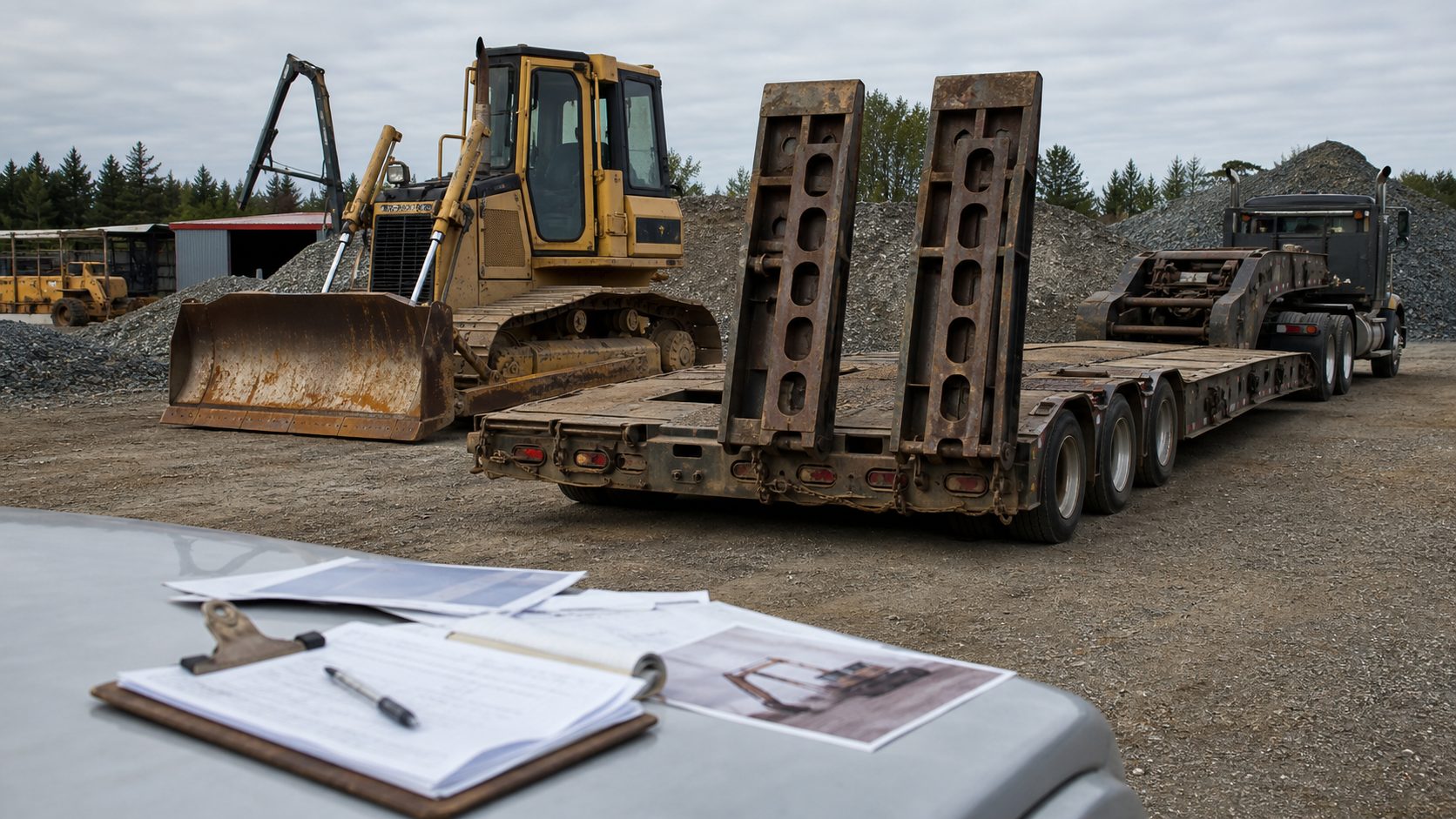
Length, width, height, and weight affect more than price. They influence trailer selection, route review, loading approach, securement, and sometimes whether extra planning is needed before a move can be confirmed.
Exact specifications are not always available, especially with used equipment, auction purchases, and older machines. That is normal. A model number, model plate photo, listing specs, and clear photos can still give enough context to start review. What causes problems is when dimensions are guessed, attachments are left out, or a listed spec does not match the machine being picked up.
Attachments are one of the easiest details to miss. A bucket left on an excavator, a blade on a dozer, forks on a loader, or loose implements traveling with the machine can change width, length, securement, and loading plans. If the attachment can be removed, say so. If it must travel with the machine, include it in the request.
A compact unit may still need review if attachments add width or if the pickup site has limited loading room.
Larger machines need closer attention to weight, height, trailer fit, and route conditions before timing can be confirmed.
Access and loading conditions can change the plan
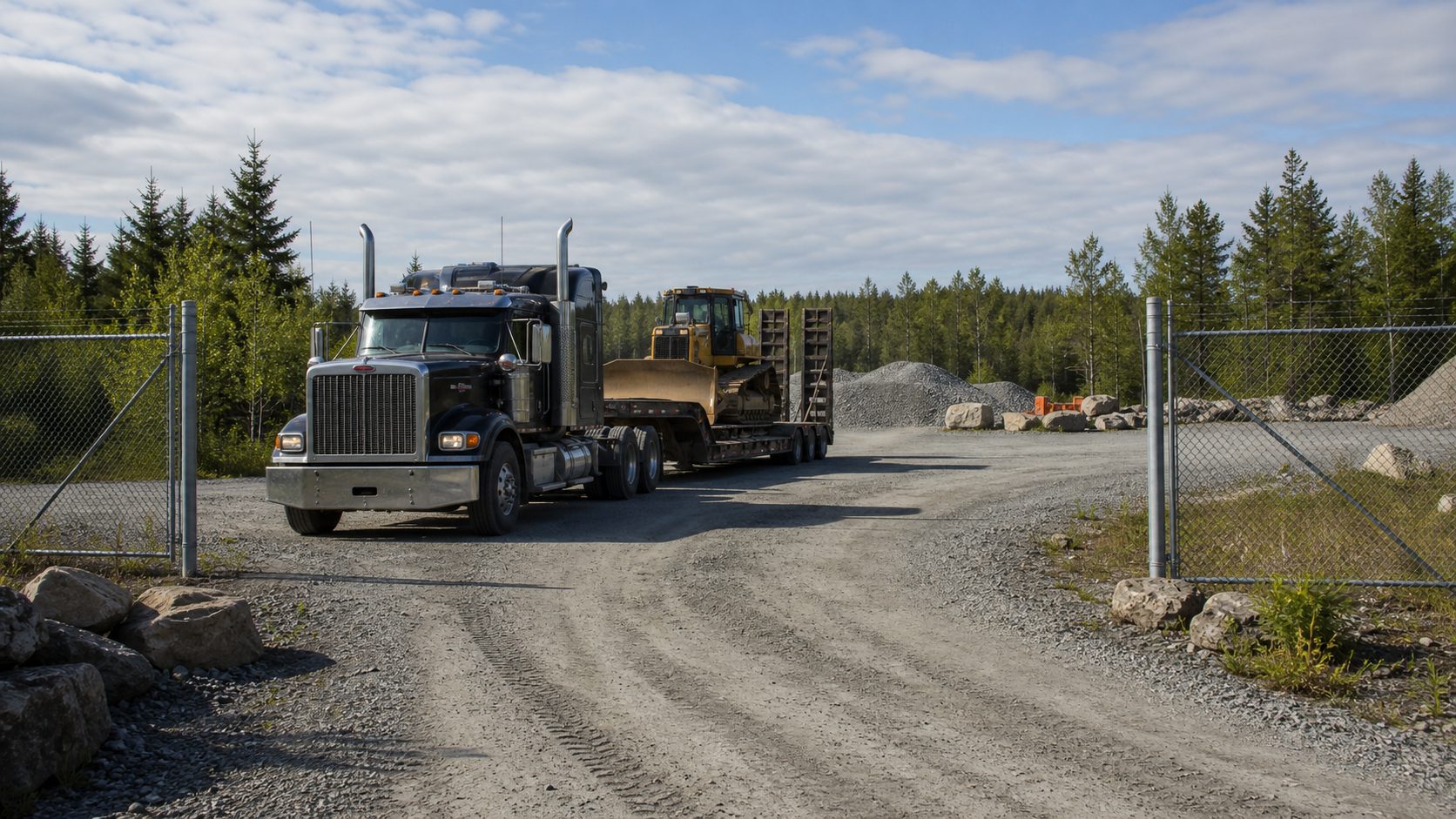
The pickup location is part of the quote. A machine sitting in an open dealer yard is different from a machine tucked behind a building, parked on soft ground, blocked into a jobsite, or located down a narrow rural lane. The same equipment can be straightforward in one place and complicated in another.
Loading support also matters. Some units can be driven onto a trailer by an operator. Others need yard assistance, a machine operator on site, ramps, winching, or special coordination. If the machine does not run, if no operator is available, or if the yard has specific loading rules, that needs to be known before the pickup is scheduled.
Delivery access should be reviewed the same way. The destination needs enough room to unload, a reachable contact, and a surface that can handle the machine and trailer safely.
Two identical machines can quote differently if one is in an open yard and the other is at a tight site with poor access, soft ground, or limited loading support.
Timing, route, and details complete the quote
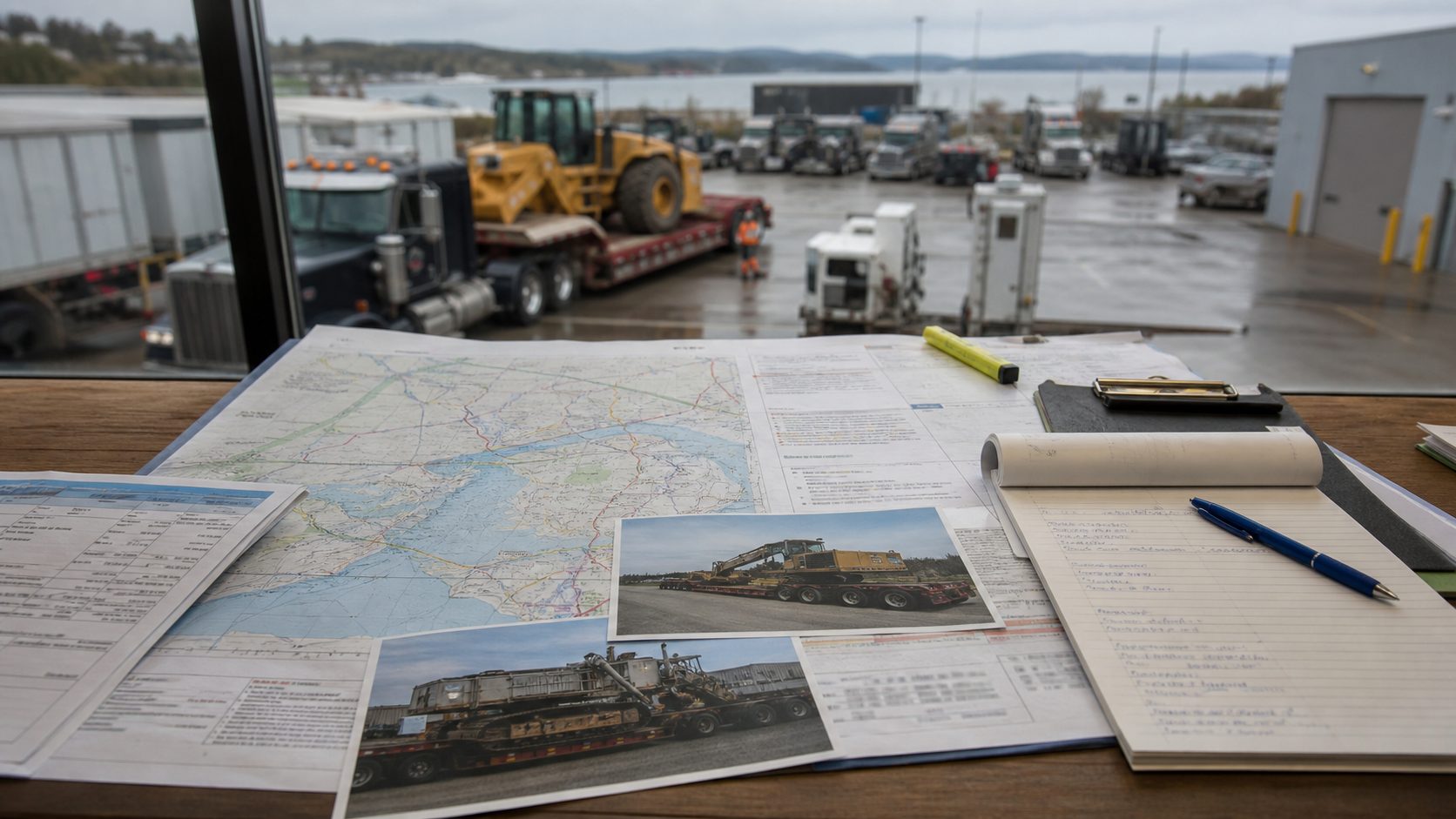
Once the load and access details are understood, route and timing can be reviewed. Distance matters, but so do road restrictions, seasonal conditions, ferry or staging requirements, and how flexible the pickup and delivery windows are. A jobsite deadline, auction release window, or buyer delivery promise should be included early so the timing can be reviewed honestly.
The fastest way to get a useful quote is to send the practical details together instead of in pieces. That does not mean every number has to be perfect. It means BEMAC can see the machine, the route, the access, the timing, and the unknowns at the same time.
If you only have partial information, send what you have and say what still needs to be confirmed. A good early quote review can identify missing details before they become pickup problems.
Flexible pickup and delivery windows can make coordination easier when a route needs to fit with other scheduled work.
A fixed auction release date or jobsite need should be included up front so timing can be reviewed honestly.
What to send for a better heavy equipment quote
A strong quote request gives enough detail for practical review without making the customer do unnecessary paperwork. The useful details are the ones that affect trailer fit, loading, access, route, and schedule.
If you are not sure about a spec, send the model plate, listing, and photos. If access might be tight, send a wide photo of the entrance or loading area. If timing matters, explain why. Those details help BEMAC review the actual move instead of chasing basic context.
The strongest quote requests usually answer three practical questions: what exactly is moving, can it be loaded and unloaded, and what route or timing constraints matter? Once those are clear, the conversation becomes much more useful. If something is unknown, mark it as unknown. That is better than leaving the detail out or guessing.
A customer does not need to know every transport term to send a good request. Plain descriptions work well: "the machine is at a dealer yard," "the blade is attached," "the seller can load during business hours," or "the farm lane is narrow but there is an open gravel pad." Those details translate directly into route and loading review.
- Machine type, make, and model
- Dimensions and weight if available
- Attachments and loose implements
- Pickup and delivery access notes
- Photos of the machine and loading area
- Timing, release, or jobsite deadlines
Why two similar machines can quote differently
Customers often expect two similar machines to quote the same way, but the surrounding details can change the review. One excavator may be in an open yard with a loader available and flexible timing. Another may be at a jobsite with limited access, a firm deadline, and a bucket plus extra attachment traveling with it.
The machine matters, but the move is the machine plus the circumstances around it. That is why BEMAC reviews equipment hauling requests around the whole picture: load, route, access, loading support, delivery conditions, and timing.
A useful quote is not just a number attached to a distance. It is a review of whether the move can be planned cleanly and what needs to be confirmed before the truck is committed.
That approach is especially important for heavy equipment because the cost of a wrong assumption can be higher. If the machine cannot be loaded, if the route needs different timing, or if the destination cannot receive the trailer, the issue is better found during quote review than after dispatch.
The best outcome is a quote that feels practical when the driver arrives. That means the machine described in the request matches the machine at the pickup point, the access notes match the site, and the receiving contact understands what is coming. A little more detail up front can prevent a much more expensive problem later.
For customers, this also makes comparing options easier. A quote built from real dimensions, real access notes, and real timing is more useful than a fast number based on assumptions. It gives everyone a clearer understanding of what is included in the move and what still needs to be confirmed before scheduling the truck.