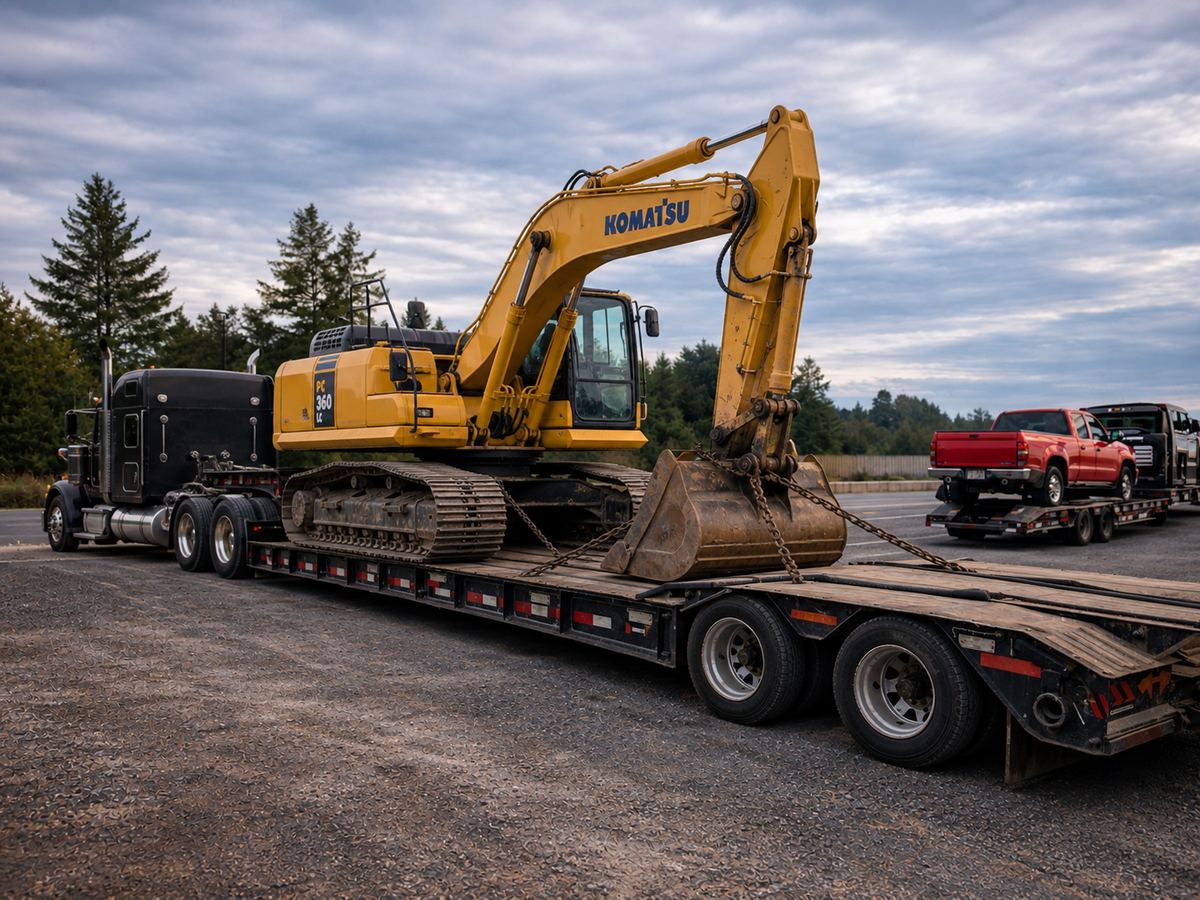
Start with the machine and configuration
The machine name is only the beginning. A skid steer with a bucket, a mini excavator with an extra attachment, a dozer with blade width, or a tractor with implements can each need different review.
Send the model if available, but also describe how the machine sits today. Attachments, folded parts, loose buckets, tire or track condition, and any removed pieces can all change the load.
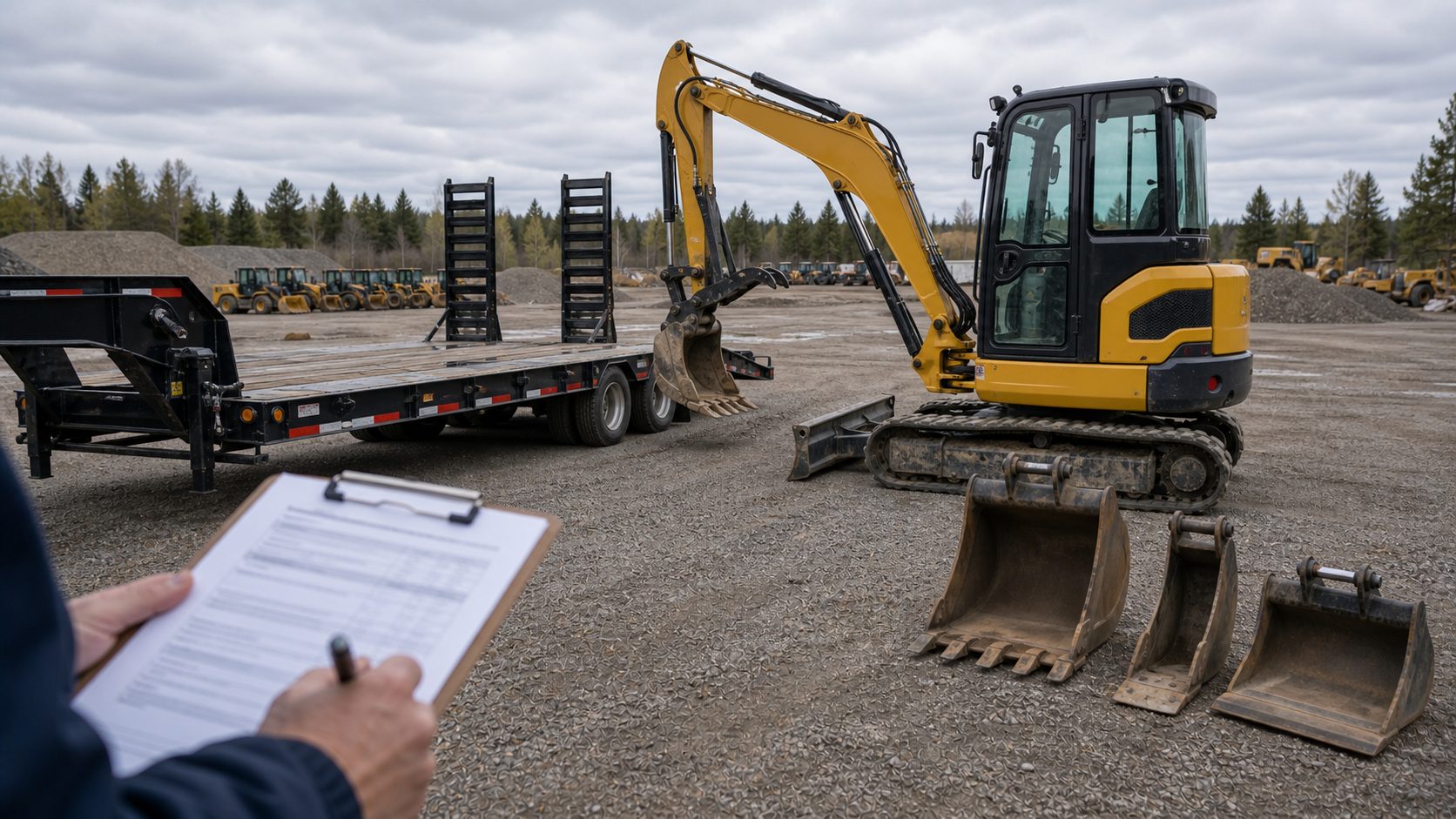
Dimensions and weight shape the review
Length, width, height, and weight help determine trailer fit, routing, loading approach, and whether more review is needed. If exact numbers are not available, send what source you have and say whether the estimate is rough.
Photos help when numbers are incomplete. A side view, front view, rear view, plate photo, attachment photo, and wide site photo can often explain the load better than a short description.
A missing width or attachment detail can change whether the load is straightforward or needs more route and trailer review.
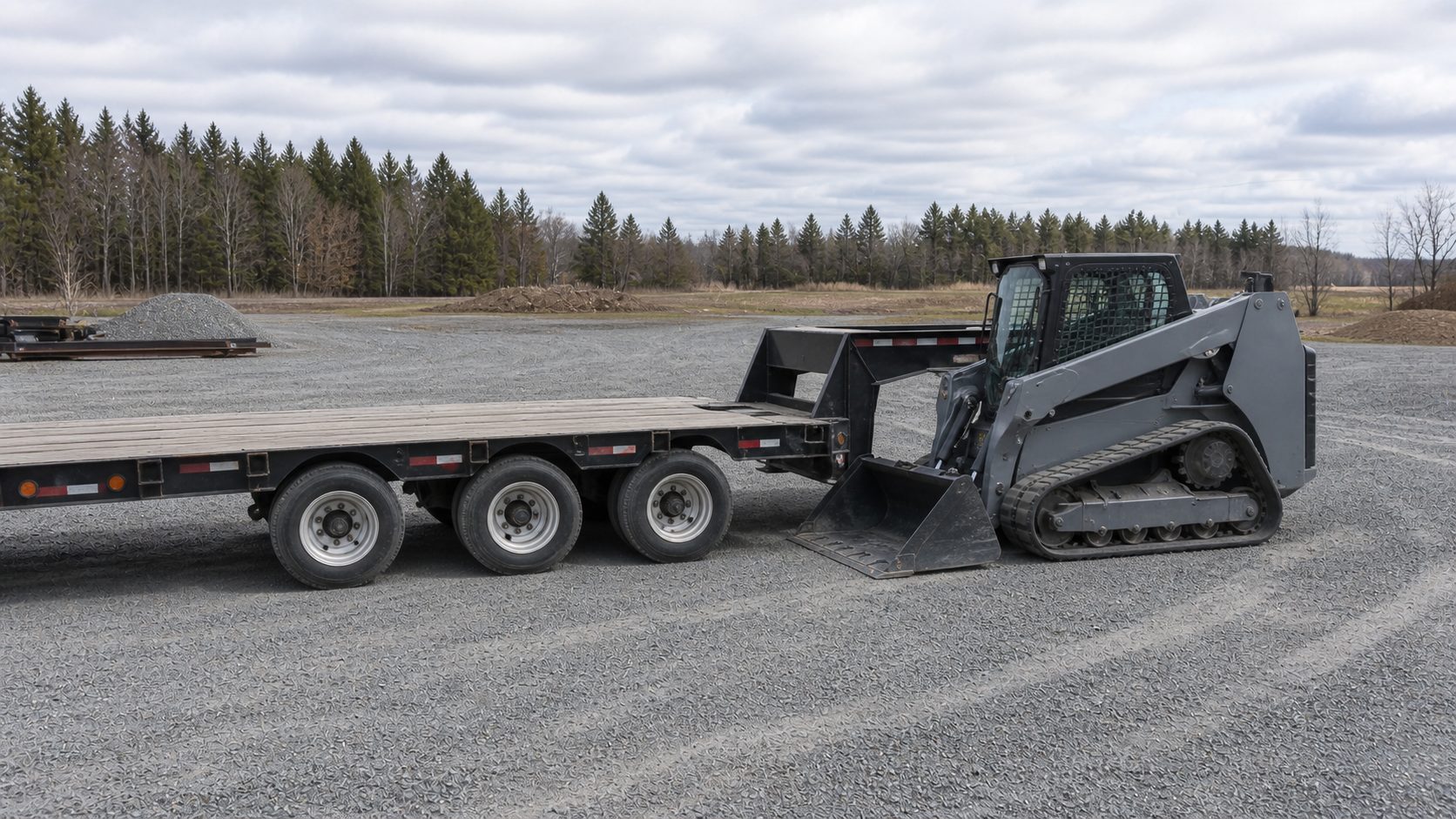
Access and loading are part of the quote
Equipment often sits in places that were built for work, not transport. Jobsites, farms, yards, fields, auctions, and industrial locations can have soft ground, narrow gates, slope, limited turning room, or restricted hours.
The quote request should explain whether the machine runs, whether loading support is available, and whether the pickup and delivery sites have enough room for safe loading and unloading.
The best request connects load, route, and timing
A useful equipment hauling quote request does not treat pickup city and delivery city as the whole job. It connects the machine details with the actual sites and the timing expectations.
That context helps separate a simple yard-to-yard move from a more sensitive jobsite, farm, remote, oversized, or time-constrained move.
- Machine type and model
- Dimensions and weight source
- Attachments or loose parts
- Running and loading condition
- Pickup and delivery access
- Contacts and timing