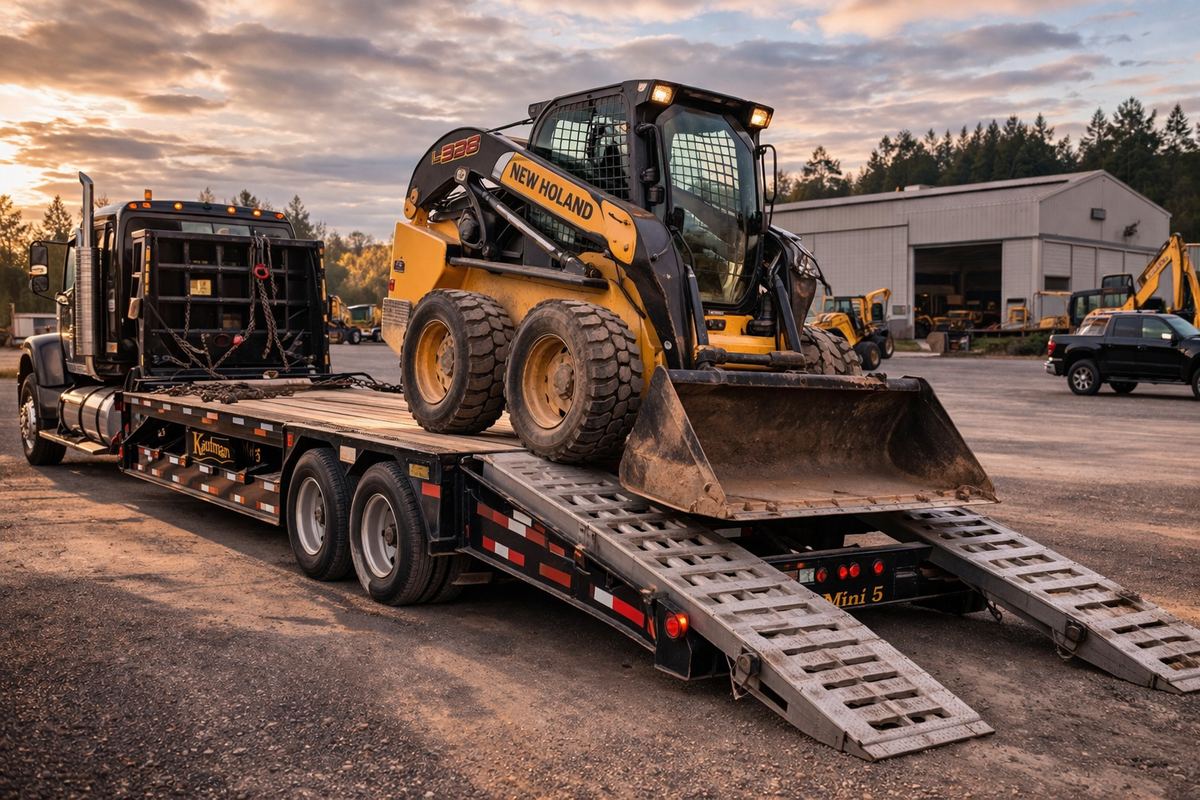
A jobsite move has more moving parts than the machine
The equipment may be ready, but the site may not be. Crews, subcontractors, gates, traffic control, material piles, mud, snow, and restricted hours can all affect pickup or delivery.
Before requesting transport, confirm who controls the site, where loading can happen, and whether the machine can be moved to a better staging spot.
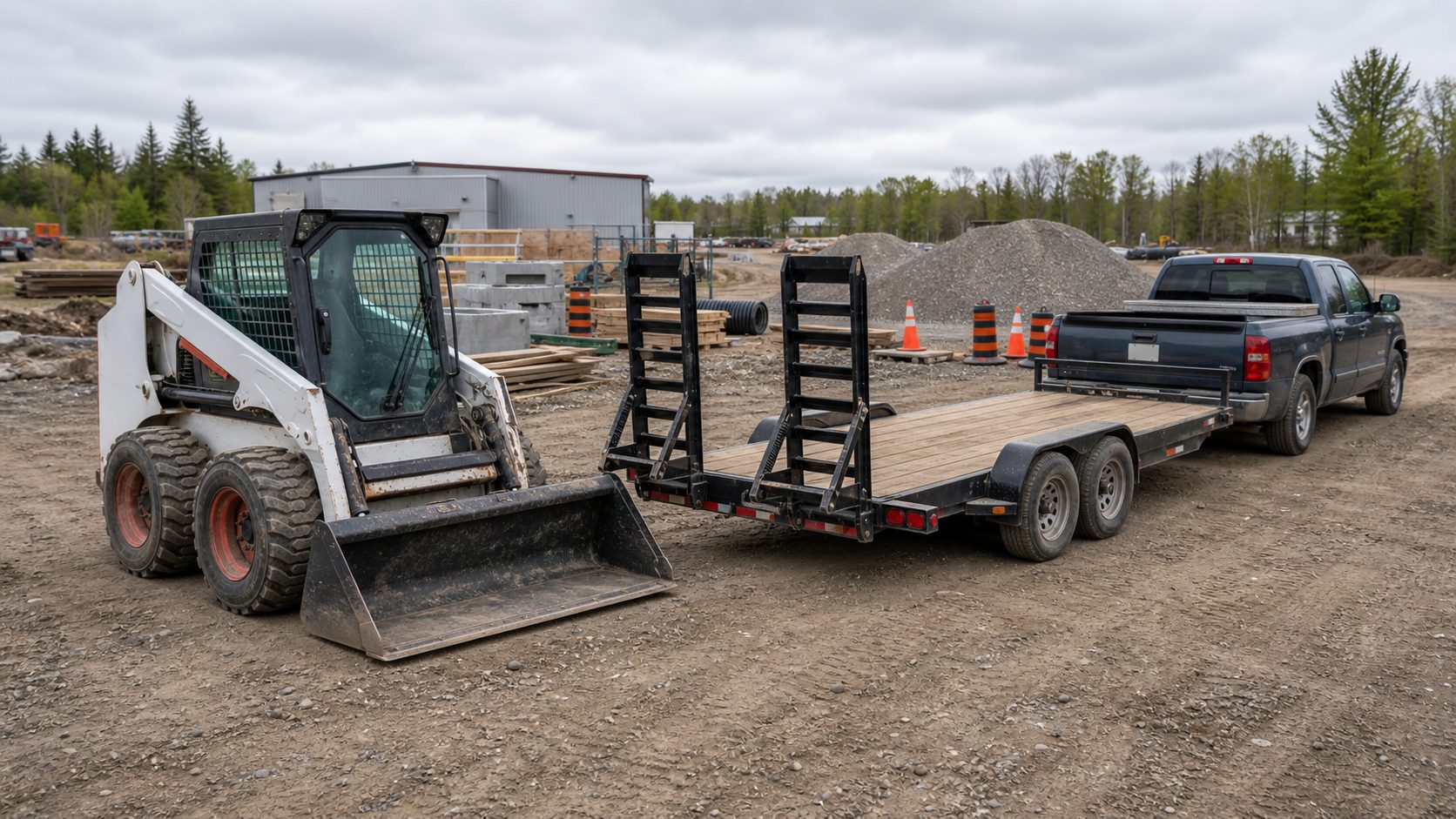
Timing should match the site reality
A machine may need to leave before concrete, excavation, landscaping, snow clearing, or another trade can continue. That does not always mean the move can happen instantly.
Useful timing notes explain the real constraint: when the site is open, when an operator is available, when another truck blocks access, or when the destination is ready to receive.
Machine can load between 8 and 11 before the lane is blocked by deliveries.
Pickup needed today, but no one has confirmed access, operator availability, or destination unloading.
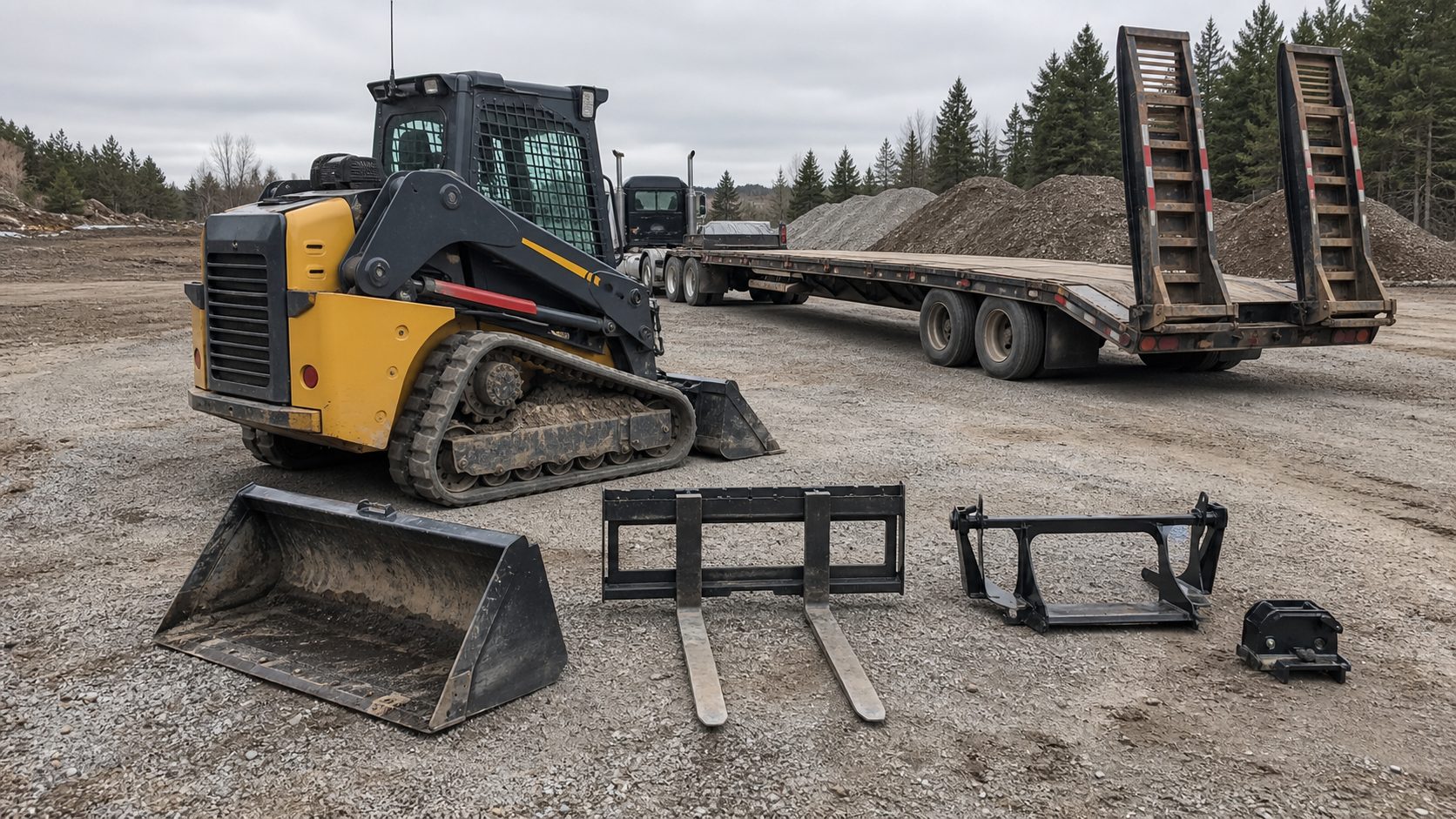
Attachments and loose parts should be listed
Contractor equipment often travels with buckets, forks, blades, brooms, compactors, or other attachments. These may be attached, loose, dirty, buried in a pile, or sitting somewhere else on site.
List what moves with the machine and where each piece is located. Loose attachments can change handling and trailer space.
The destination needs a plan too
Contractors often focus on getting equipment off the current job. The receiving site still needs a contact, unloading space, and awareness of when the machine is arriving.
A move between jobsites works best when both ends are ready, not just the pickup site.
- Site contact and hours
- Loading area and staging spot
- Attachments and loose parts
- Machine condition
- Destination contact and unloading room