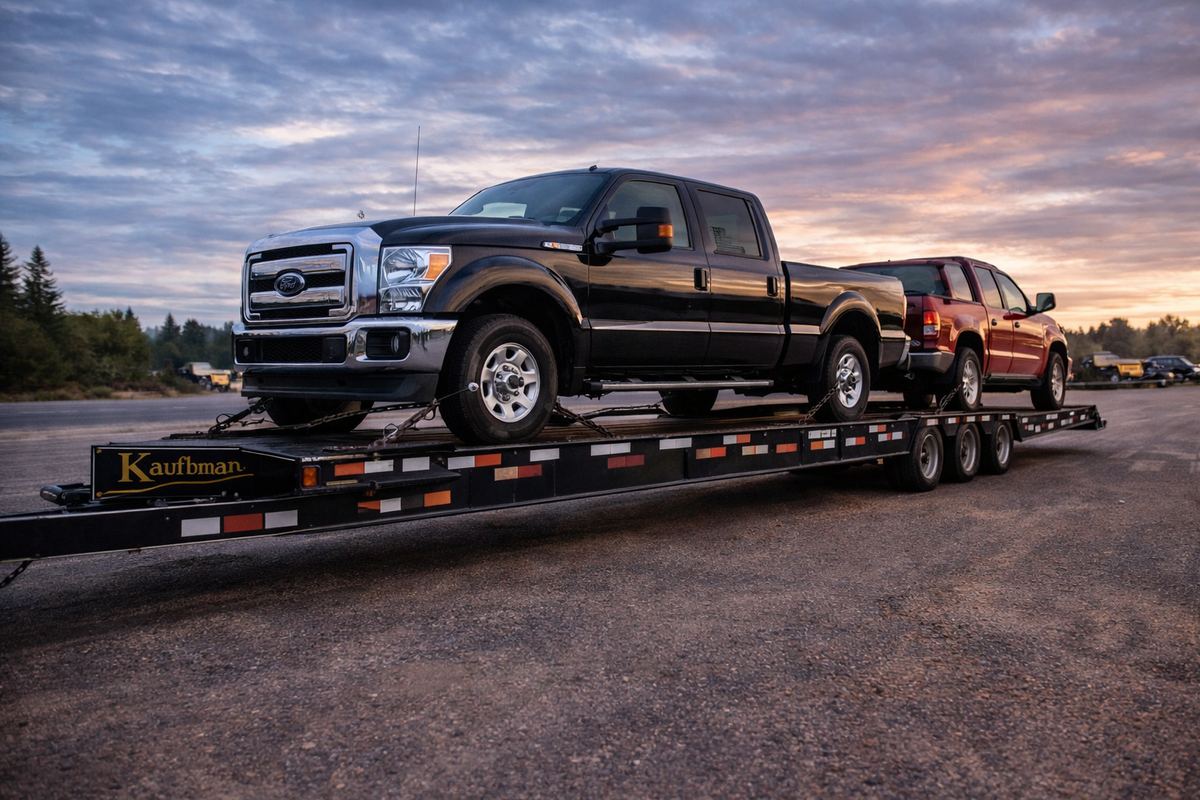
Not every passenger vehicle loads the same way
A pickup, SUV, cargo van, passenger van, and light commercial unit can all be called a vehicle, but they may occupy different trailer space and have different clearance needs.
Long wheelbase, roof height, camper shells, ladder racks, toolboxes, lifts, large tires, and lowered suspension should be mentioned early.
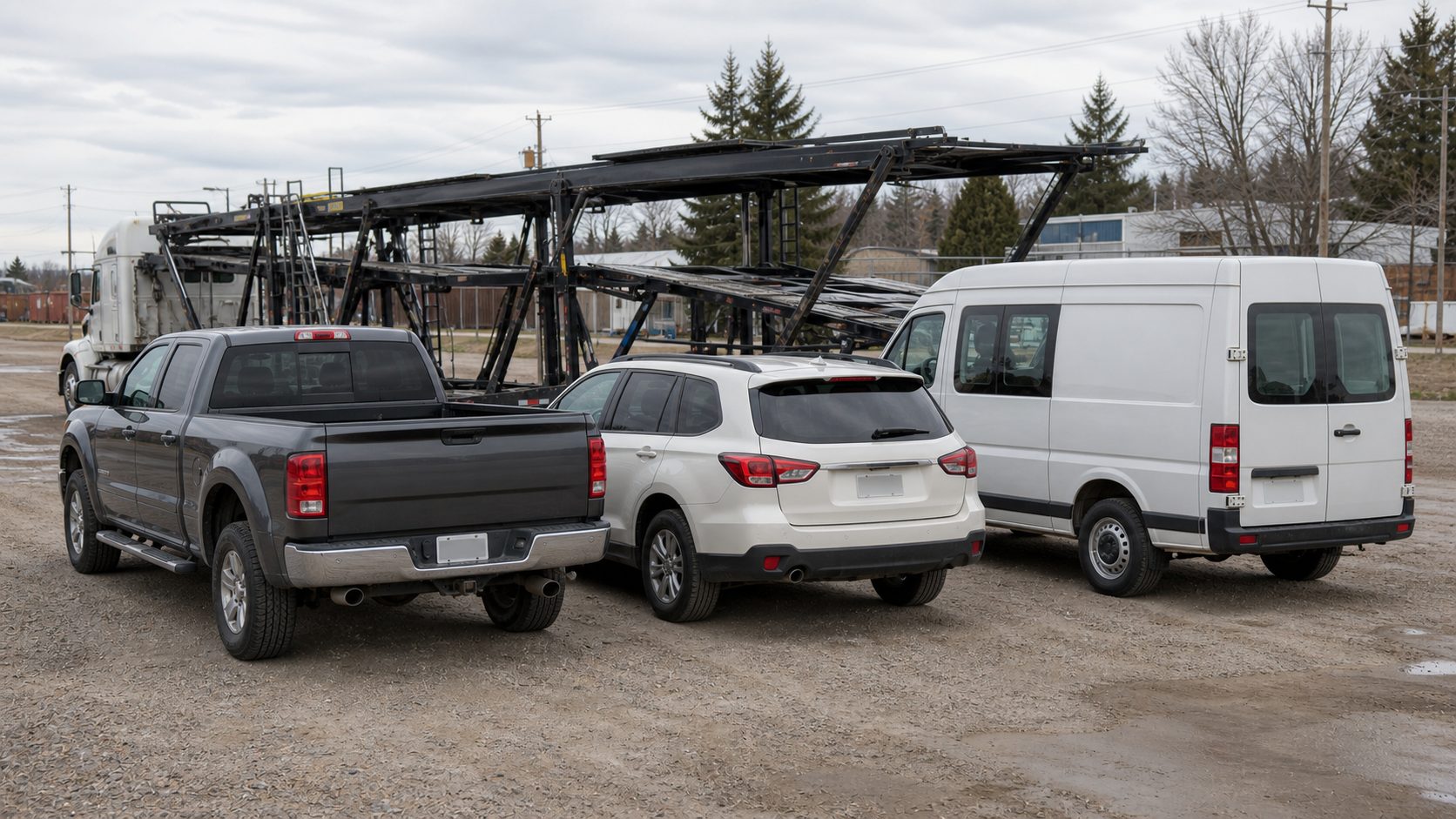
Cargo and accessories should be disclosed
Vehicles sometimes have personal items, tools, racks, bins, spare tires, or equipment inside or attached. These details can affect weight, responsibility, and loading.
If anything is inside the vehicle or mounted to it, describe it. Do not assume accessories are invisible to the transport plan.
Roof rack, ladder rack, toolbox, plow mount, or camper shell.
Tools, boxes, parts, tires, or other loose items that may change weight or expectations.
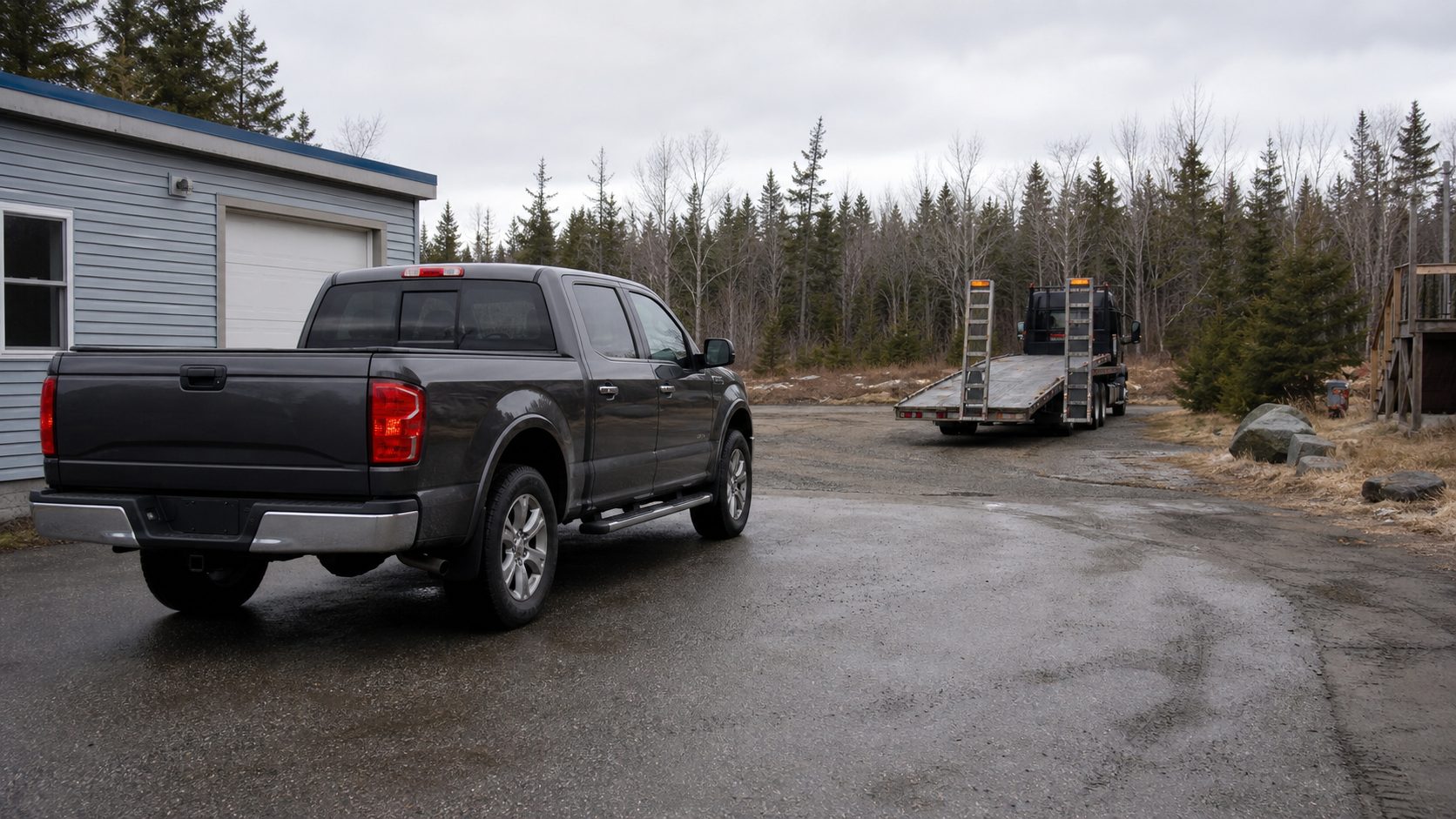
Condition and access still apply
A large vehicle that runs and drives is usually easier to handle than one with dead batteries, flat tires, locked steering, or limited access.
Pickup and delivery locations also matter. A van in a tight downtown lot or a pickup in a muddy rural lane creates a different review than a clear dealer yard.
Send the details that explain the size
The transport review does not need a perfect spec sheet for every vehicle. It needs enough information to understand whether the vehicle is standard, modified, loaded, oversized, or access-sensitive.
Photos are especially useful for modified trucks, tall vans, and vehicles with racks or attachments.
- Vehicle type and body style
- Lift, lowering, racks, or accessories
- Running condition
- Cargo or loose items
- Pickup and delivery access
- Photos showing height and length